Showing posts with label PCB - New Arrivals. Show all posts

Sunday, 17 January 2021

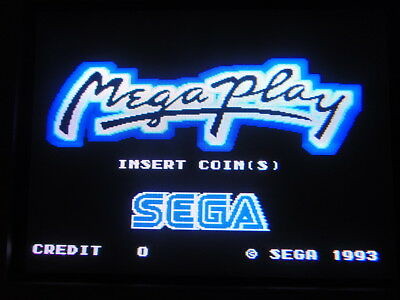
Arcade Op PCB Pick Ups #1: Sega Mega Play


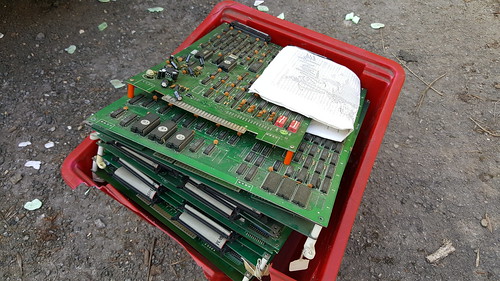
Amongst the PCB haul from an old Op in Blackpool were three Sega Mega Play motherboards complete with ten carts.  I must admit I didn’t know much about the system.  I had come across Mega-Tech carts, but it was the first time I had seen these.  One of the games was Streets of Rage II.  This immediately piqued my interest being an all-time favourite of mine, and I was very excited about the prospect of playing it in a cab.


Reading up on the system, I discovered that it was released in Europe and Asia and Sega’s second attempt at bringing Megadrive games to the arcades, the first being the Mega-Tech.  Whereas credits buy the player time on the Mega-Tech system, you get lives for your money on the Mega Play, giving a more traditional arcade experience.  I much prefer this and was never a big fan of the ‘credits to buy time’ concept back in the day.  The system also differs in that it has four cart slots, whereas the Mega Tech has seven.  It appears eleven games were released in total.  The games have been modified to specifically work with the hardware and do not work on the Megadrive.  Significant changes were made to the games to make them more suited to an arcade environment.  For example, Sonic the Hedgehog has very strict time limits, removes the two slowest Zones, Marble and Labyrinth, has no special stages, making chaos emeralds unobtainable, and all the extra life boxes have been removed.  These have a massive impact on how the game is played, making it more of a time attack and high score challenge.  There is a neat page detailing the differences here. 


http://gaminghell.co.uk/SonicTheHedgehog.html 


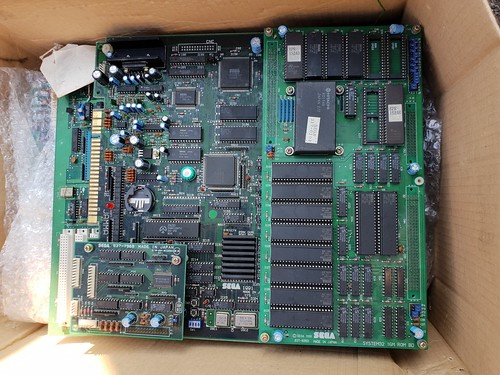
A lot of the Op’s boards had been stored poorly, but these had at least been wrapped in bubble wrap and looked barely used.  Two of the three motherboards are fully working, which is a good result!  The system is Jamma compatible. 


Like the Mega-Tech, the Mega Play was designed with two monitors in mind, one for game selection (top) and one for the game itself (bottom).  I noticed that a mod had been carried out on all three of my motherboards, allowing the player to select games by using Button A of Player 1.  This is useful when using the board in a cab without a select button, and the mod is actually described in the Mega Play service manual. 


My Mega Play cart collection, along with their respective product numbers.  I wonder why Golden Axe II number ends with B? 


1. Sonic The Hedgehog 610-0297-01 

2. Golden Axe II 610-0297-02B 

3. Grand Slam 610-0297-03 

4. Tecmo World Cup x3 610-0297-04


5. Streets of Rage II x2 610-0297-05 

6. Bio-Hazard Battle 610-0298-06 

7. Sonic The Hedgehog 2 x2 610-0297-07


The above carts were picked up from the Op, except for Sonic The Hedgehog, which I bought from a seller in Italy. 


I’m currently missing the following titles for a full set. 


8. Columns III: Revenge of Columns 

9. Shinobi III: Return of the Ninja Master 610-0297-09 (tbc) 

10. Gunstar Heroes 

11. Mazin Wars 610-0297-11 (tbc) 


Some sources suggest the original Streets of Rage was also released, but there is little evidence to support this.  It is mentioned on the flyer, but the screen shots are from the sequel, so it could be an error.  Amusingly the title has been misspelt on both the flyer and the cart label, with Street instead of Streets. 


The games originally came in plastic cases, similar to the Megadrive.  I haven’t got any cases, and the only paperwork I’ve got is for Streets of Rage II.  The art is very similar in size to the MVS mini marquees. 


Given the scarcity of the system and the small number of games released, I suspect the system wasn’t a great success.  It’s unclear whether Sega were trying to replicate the success of the MVS or promoting Megadrive games in arcades.  Graphics and sound would have been underwhelming compared to arcade releases at the time.  Also the Mega-Play was competing against a certain fighter which would go on to dominate the arcades in the early to mid-nineties. 


I’m really happy to have discovered this system, it’s an interesting piece and a nice addition to my collection.  I plan to install it in the Lordsvale cab I picked up from the same Op.  I’d love to get the full set of carts, but they’re proving incredibly hard to find.  If anyone has any leads please get in touch. 

Saturday, 2 May 2020

New PCB Arrival - Salamander – Konami - 1986


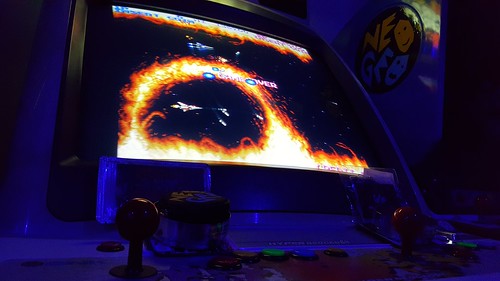
I remember my school discos well.  A can of Shandy or a carton of Tip Tops, a packet of crisps and change for the arcade machines was pure happiness!  I first played Salamander at the annual school disco, probably not too long after its release.  The game is a spin-off to Gradius and introduces a simplified power-up system, two-player cooperative gameplay and both horizontally and vertically scrolling stages.  I remember the swirly fire dragons as I’ll call them, and the game being very hard.  Twenty pence didn’t seem to get me very far on this game! 


The venue was a pub in the village, The Kings Head.  They had two generic cabs in the function room and one in the bar area.  I think they were Electrocoin Goliaths, but my memory is hazy.  In the function room they seemed to change out the least popular game each year.  The cabs were always busy at the discos, and there was always a crowd round the cab featuring the new game.  In addition to Salamander, I remember Empire City: 1931 (I think!) Final Fight and Shadow Warriors.  I was blown away when I saw Final Fight here for the first time, and I remember watching someone clear Shadow Warriors and the excitement as Ryu Hayabusa defeats the boss and sails back to Tokyo in his boat.

The King’s Head during April 2020 during the lockdown.  Unfortunately the arcade cabs are long gone!
I didn’t get to play the machine in the bar area very often, only playing it when my parents decided to go there for a drink.  The only game I remember playing in the bar was Capcom’s awesome Magic Sword.

Going back to Salamander, the game has an interesting history.  The arcade version was released under its original title in Japan (version J) and as Life Force in North America.  The Japanese and European versions are nearly identical, but the American version changes the game’s plot by setting the game inside a giant alien life form, infected by a strain of bacteria.  Stages featuring star field backgrounds were altered to reflect this, and the power-ups were given different names.  An enhanced version of Salamander was later released in Japan, with the American title Life Force.  The theme was extended, with the backgrounds and mechanical enemies being completely redrawn and given organic appearances.  Also the power-up system was modified, using the same system as Gradius and some of the music tracks have been completely changed.

It’s also cool to note that Electrocoin released a dedicated cab, complete with awesome artwork.  These are pretty rare now, and I’ve only seen a few come up over the years.


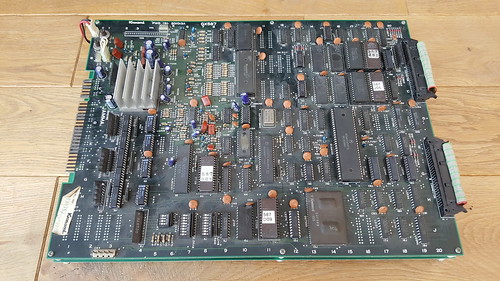
On my most recent Raid I picked up a Salamander board.  I was really happy to find one, and it was definitely one of the highlights.  However the boards had been stored poorly, and I didn’t expect it to work.  Upon testing, the game booted to garbage and required extensive repair work.  VectorGlow has once again worked his magic.  Repair work was time consuming, with him replacing nineteen logic chips and all of the optocouplers, two EPROMs, the main 68000 CPU and a capacitor.  These were all on the top board, there were no faults on the lower board.  The board is version J.


The Hyper Neo is my cab of choice for this board. 


I love how much room there is inside the cab, and I recently had a shelf made to fully utilise the space.


The game is now once again fully working.  I’m really happy to have the board in my collection, and I’m extremely grateful for VectoGlow’s awesome repair work.

Thursday, 25 July 2019

New PCB Arrival - Hyper Duel – Technosoft - 1993


One of my big PCB collecting regrets was selling Hyper Duel.  I picked up the board about twenty years ago from Mak Japan PCB shop in Akihabara for around ¥10,000, which was about fifty pounds back then.  The game also received a home port on the Japanese Sega Saturn and was considered a bit of a hidden gem, and I bought it as well around the same time.

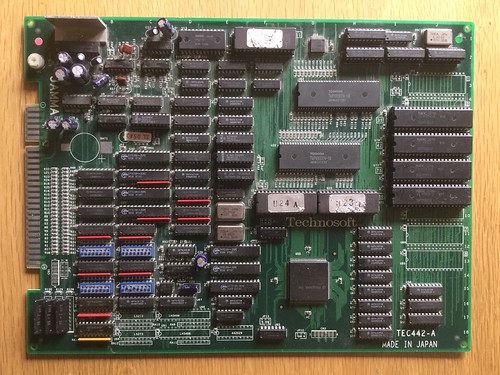
Hyper Duel is a cool horizontal space shooter developed by Technosoft, best known for the Thunder Force series.  The game has great pixel art and features the ability to switch between spaceship “Fighter” mode and humanoid mecha “Armor” mode, really setting the game apart.  The ship has greater speed and manoeuvrability, and is the ideal mode for dodging tight bullet patterns.  The mecha is slightly more powerful, and the gun can be aimed up to forty five degrees above or below you.  On the downside, it’s larger and thus a bigger target. 

Hyper Duel for the Saturn was released in 1996 and features a faithful port of the arcade game, as well as a reworked version with updated graphics and a revised soundtrack.  The Saturn Mode has much more detailed sprites and backgrounds, with some sprites being redrawn completely.  It also implements some gameplay tweaks and changes.  Most notably a third button is added to lock the robots aim in place.

My collecting mentality has changed over the years.  Back then I just wanted to own the best version of a game.  I preferred the Saturn Mode over the arcade original and decided to sell the PCB.  Nowadays if I like a game, I tend to look out for it on different formats.  I enjoy seeing the gameplay, artwork and packaging differences and finding out what makes each version unique.

This leads me back to Hyper Duel.  I missed having it on the original arcade PCB format and really wanted to play it on an arcade cab.  When I had the board previously, I played my arcade boards via a Supergun and console games on the same TV.

Prices for the game have increased dramatically over the years and it’s become quite a difficult game to track down.  Matt, a Ukvac member recently done me a great deal on the game and there is a cool story behind it.  The game was picked up from a local arcade in Torquay.  Matt had known the manager who runs it for about twenty five years and at one point actually worked for him.  The board had been in his possession for approximately twenty years.  It was acquired by him when a previous Operator vacated the premises and left several Jamma PCB’s hanging up by nails on the wall in the storeroom, along with a comedy face mask hanging up in the prize shop!  Since Jamma games had passed by that time, he had no way of testing them, and he simply assumed the boards were deliberately left behind because they were probably faulty.  The boards were put on a shelf and then eventually all in a box for the next twenty years!  Last year Matt bought himself a Jamma cabinet and was looking for some boards.  He knew the manager had these boards all this time and contacted him to see if he would sell them.  A deal was made, but Matt had to test them before a price was agreed.  All of them apart from one were either dead or faulty.  Hyper Duel was one of the faulty boards, but has since been repaired by VectorGlow.


I know from my own experiences that sometimes it’s very surprising what games you come across on Raids and in Op storerooms, games you never remember seeing back in the day and would never expect to find.  Hyper Duel is one of those games and I’m really happy to have it back in the collection.

Thursday, 18 July 2019

Arcade Operator Raid in the Back of Beyond

This was a pretty unexpected Raid as the Op phoned me out of the blue.  He gave me a vague description of what he had and a date was made for a visit.


An open road, blue skies and helicopters!?  This journey was more Cruis ‘n Blast than OutRun!


The destination was a remote location off the beaten track, west of the M25.  We drove through woodland and saw birds of prey circling overhead as we approached.


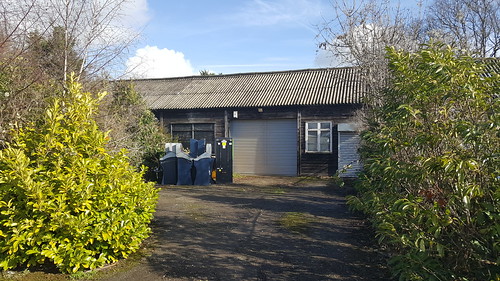
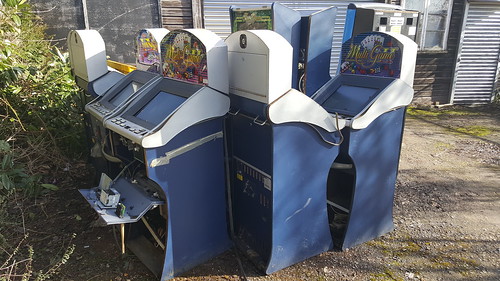
We arrived early.  Picture the Evil Dead cabin, but with some dilapidated fruit and casino machines outside and you won’t be too far off.


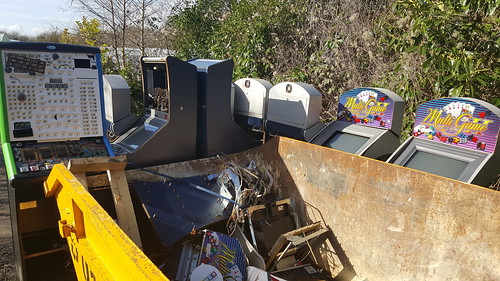
I had a quick scan of the skip, but there didn’t appear to be anything video game related.


We had a bit of time to wait and so we ventured to a nearby garden centre for a bite to eat.

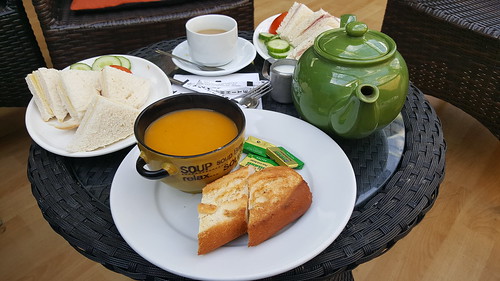
The parsnip and carrot soup was excellent.


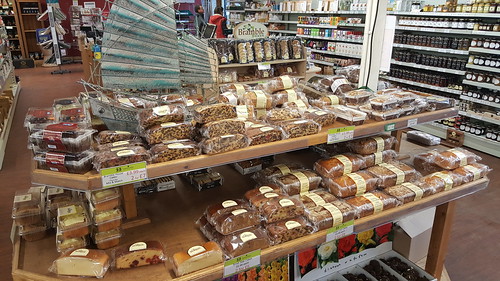
They also had a nice range of cakes, chutneys, beers and wines.


Cactus.  Or should it be cacti?


However there was no time to hang around looking at cactus (or cacti?), we had a Raid to go on!  We made our way back to the Evil Dead cabin.


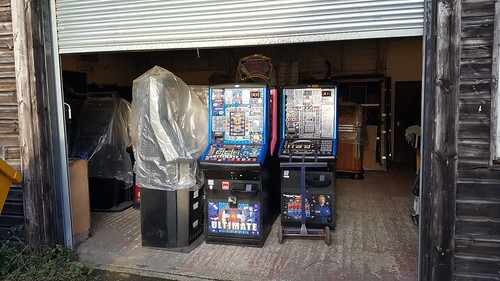
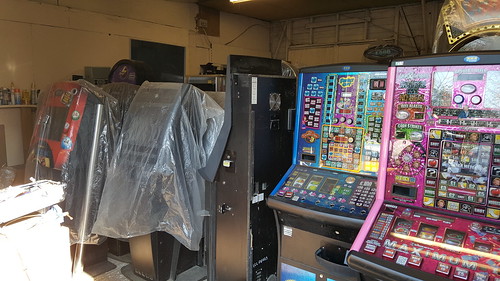
The workshop was mostly filled with fruit machines.  The Op had taken over the business from his father.  He said that they used to supply a lot of video games to neighbouring pubs, universities and colleges.


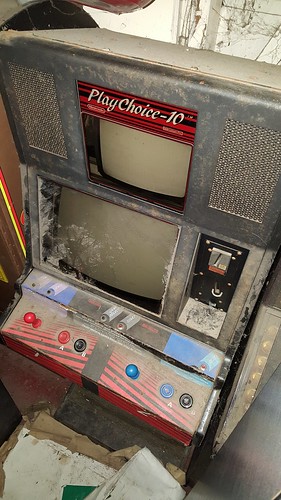
I climbed over the fruit machines at the back of the cabin to find a Nintendo PlayChoice-10.  It had obviously been sat there for a long time.


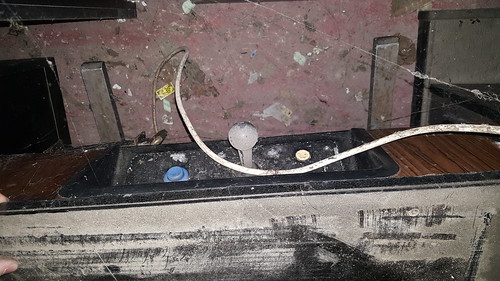
There was also a generic cocktail cab.


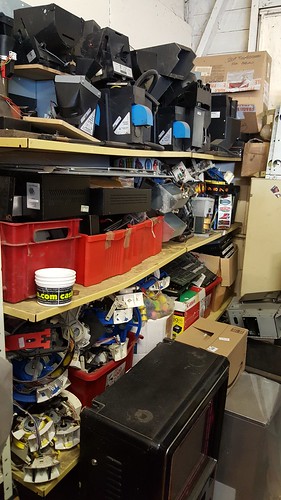
Checking the shelves for video game parts.


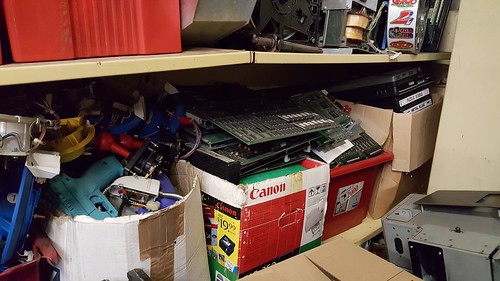
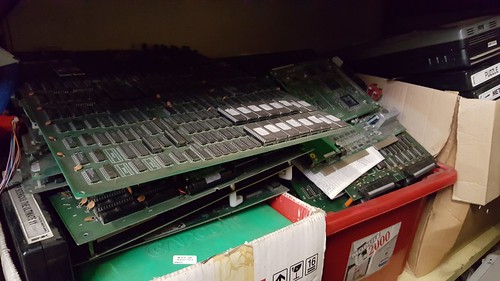
At the back there were a couple of boxes of boards and random parts, which included various buttons, joysticks and guns.


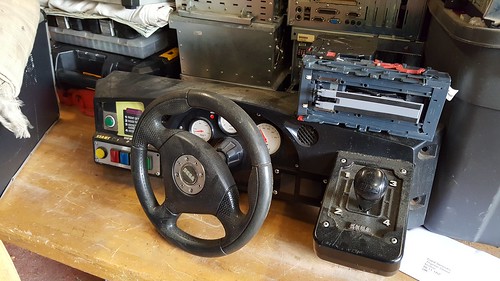
I also picked up some monitor chassis and a Sega driver dashboard.


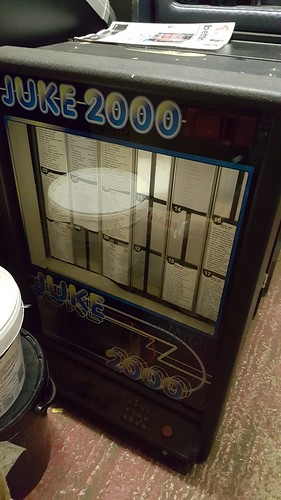
They also had a couple of old jukeboxes.


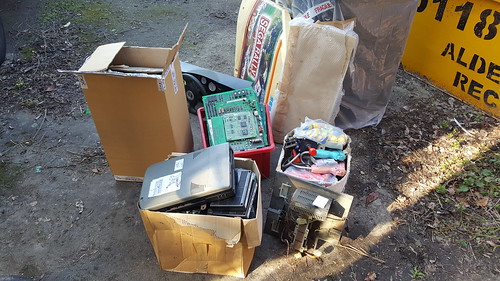
Today’s pick ups.


The boot loaded up.


Raid Highlights

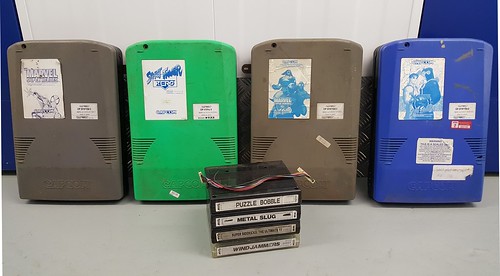
These Capcom CP System II titles all came complete with motherboards, which was a nice bonus.  It was also the first time I’ve come across the grey Asian type. 


As I was carrying Marvel Super Heroes I heard something rattling round inside the case.  Further investigation revealed that the battery had disintegrated, spewing corrosive fluid across the board.


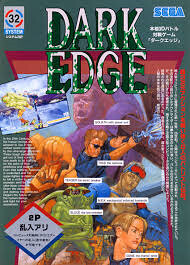
Unfortunately the PCB’s had been stored badly and there were a lot of sports titles, including six Tecmo World Cup ’90 boards no less!  However there were a couple of interesting games, including Sega’s obscure Dark Edge and the Konami classic Juno First.


Dark Edge is a game I hadn’t come across before. 


Released in 1993 on System 32 hardware, Dark Edge is Sega’s first attempt at a 3D fighter, using sprite scaling to simulate a 3D playfield.  Unusually for this type of game, it has a sc-fi setting.  It’s definitely one I’m looking forward to playing.